

Kewra
Kewra
11 in stock
Sell by Date: March 2029
Couldn't load pickup availability
Product No. 1761
Pandanus odoratissimus L.
| Origin | India |
| Plant part | Blossoms |
| Cultivation | Wild |
| Extraction | Distilled |
| Main constituents | Methyl phenethyl ether, Terpinene-4-ol |
| Aroma | Floral, Sweet, Fruity |
| Ingredients (INCI) | Pandanus Odoratissimus Flower Oil |
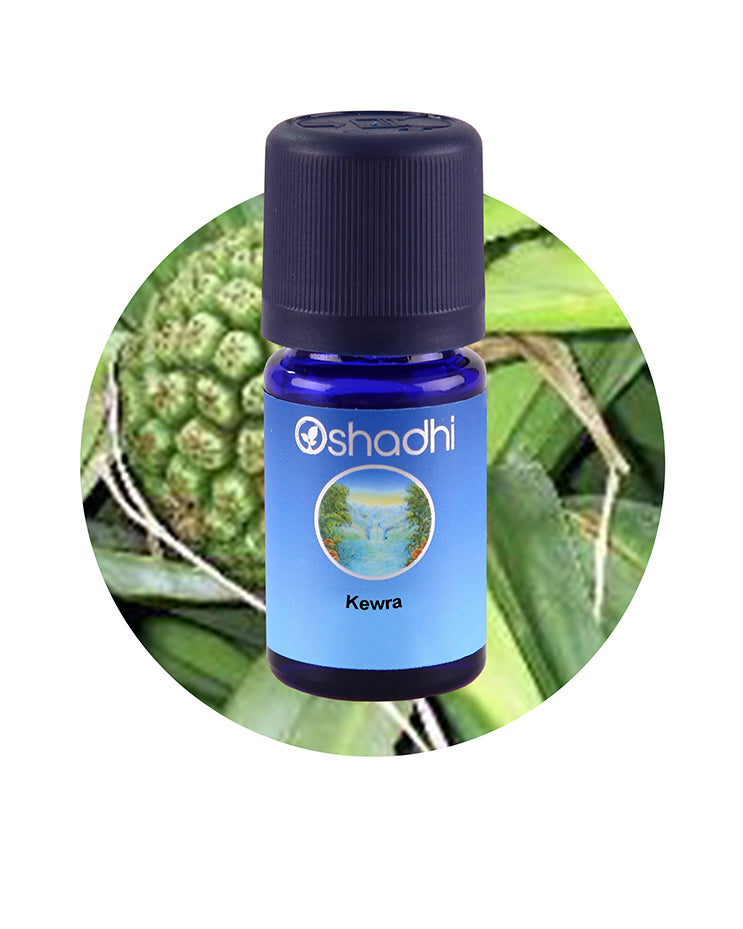
Kewra is frequently confused with pandan, the leaf used to flavour rice and sweets in Southeast Asia. Pandan is Pandanus amaryllifolius. Kewra comes from the flowers of a different species, Pandanus odoratissimus, and its aroma rests on a different molecule entirely.
01 · Origin
A tropical screw pine of the Pandanaceae, with long spiral leaves and stilt roots, found along coasts and wetlands of India. The fragrant part is the male inflorescence, wrapped in cream-coloured bracts. This oil is distilled in India from wild-collected blossoms.
02 · Chemistry
Methyl phenethyl ether, also called phenylethyl methyl ether, is the defining constituent and gives the honeyed, slightly green floral tone. Terpinen-4-ol follows. In India the flowers are also distilled into kewra water and into attars, where the distillate is captured in a base oil such as sandalwood.
03 · In Practice
Sweet, honeyed and floral, with a green, fruity edge that some compare to jasmine and rose. A middle note. Natural perfumery, attar work, diffusion and skincare formulation at low concentration. Blends with sandalwood, rose, jasmine, vetiver, saffron and cardamom.
General information: For external use only. Dilute before applying to skin. Keep away from heat and sunlight. Keep out of reach of children. Avoid contact with eyes and mucous membranes.
How to use Essential Oils
Find out more about how Essential Oils can be used and the different application methods:
https://oshadhi.com/pages/how-to-use-essential-oils