

Eucalyptus Globulus (organic)
Eucalyptus Globulus (organic)
Low stock: 2 left
Sell by Date: March 2029
Couldn't load pickup availability
Product No. 1370
Eucalyptus globulus
| Origin | Spain |
| Plant part | Leaves |
| Cultivation | Wild-crafted organic |
| Certification | DE-ÖKO-007 |
| Extraction | Distilled |
| Main constituents | 1,8-Cineol, alpha- & beta-Pinene, Limonene |
| Aroma | Camphoraceous, Minty, Fresh |
| Ingredients (INCI) | Eucalyptus Globulus Leaf Oil* |
*Certified organic, DE-ÖKO-007.
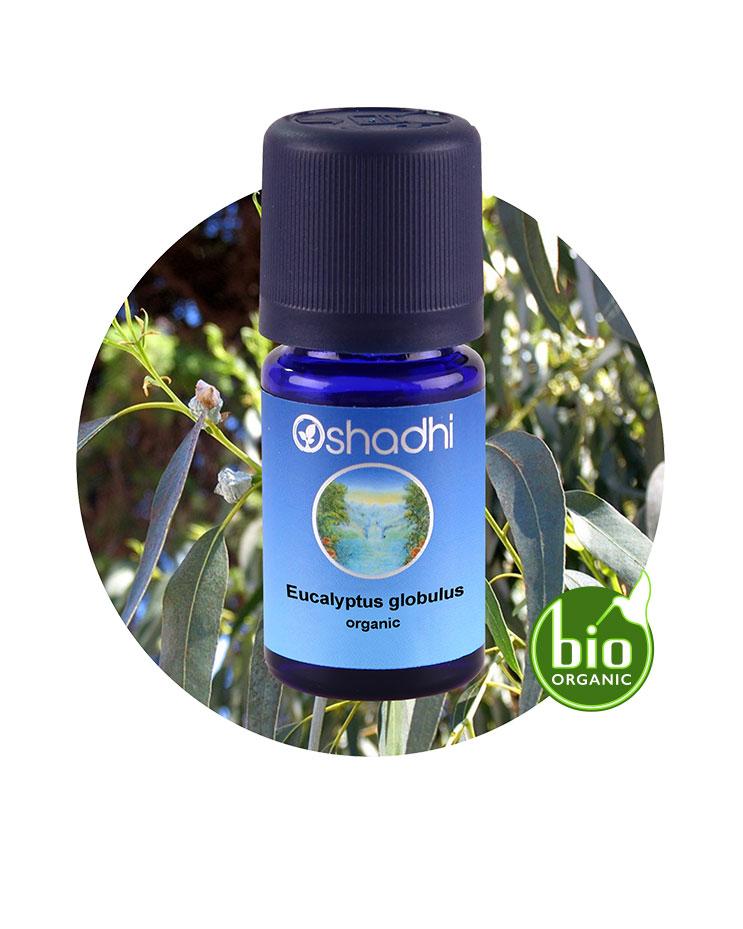
Eucalyptus is a genus of several hundred species, and their oils vary from lemony to peppery to sharply camphoraceous. Eucalyptus globulus, the Tasmanian blue gum, is the cineole archetype and the reference point for most of the rest.
01 · Origin
A fast-growing tree of the myrtle family, Myrtaceae, native to Tasmania and south-eastern Australia and widely planted across the Iberian peninsula. Young trees carry waxy, blue-grey leaves; mature trees carry long, sickle-shaped leaves. This oil is distilled in Spain from the leaves, wild-crafted under organic certification (DE-ÖKO-007).
02 · Chemistry
1,8-Cineole dominates by a wide margin. Alpha- and beta-pinene and limonene make up most of the remainder. The result is a sharp, single-minded oil. Eucalyptus Radiata (No. 1401) gives a softer cineole profile, and Eucalyptus Citriodora (No. 1396) a different chemistry altogether.
03 · In Practice
Fresh, penetrating and camphoraceous, with a cool, slightly woody undertone. A top note. Diffusion, bath preparations, massage blends, household formulation and olfactory study. Blends with rosemary, peppermint, lavender, pine, lemon, tea tree and cedarwood.
General information: For external use only. Dilute before applying to skin. Keep away from heat and sunlight. Keep out of reach of children. Avoid contact with eyes and mucous membranes.
How to use Essential Oils
Find out more about how Essential Oils can be used and the different application methods:
https://oshadhi.com/pages/how-to-use-essential-oils