

Coriander Herb / Cilantro (organic)
Coriander Herb / Cilantro (organic)
Low stock: 3 left
Couldn't load pickup availability
Product No. 1796
Coriandrum sativum
| Origin | Egypt |
| Plant part | Herb |
| Cultivation | Certified organic |
| Certification | DE-ÖKO-007 |
| Extraction | Distilled |
| Main constituents | trans-2-Decenal, Decanal, Linalool, trans-2-Dodecenal |
| Aroma | Herbaceous, Spicy |
| Ingredients (INCI) | Coriandrum Sativum Oil* |
*Certified organic, DE-ÖKO-007.
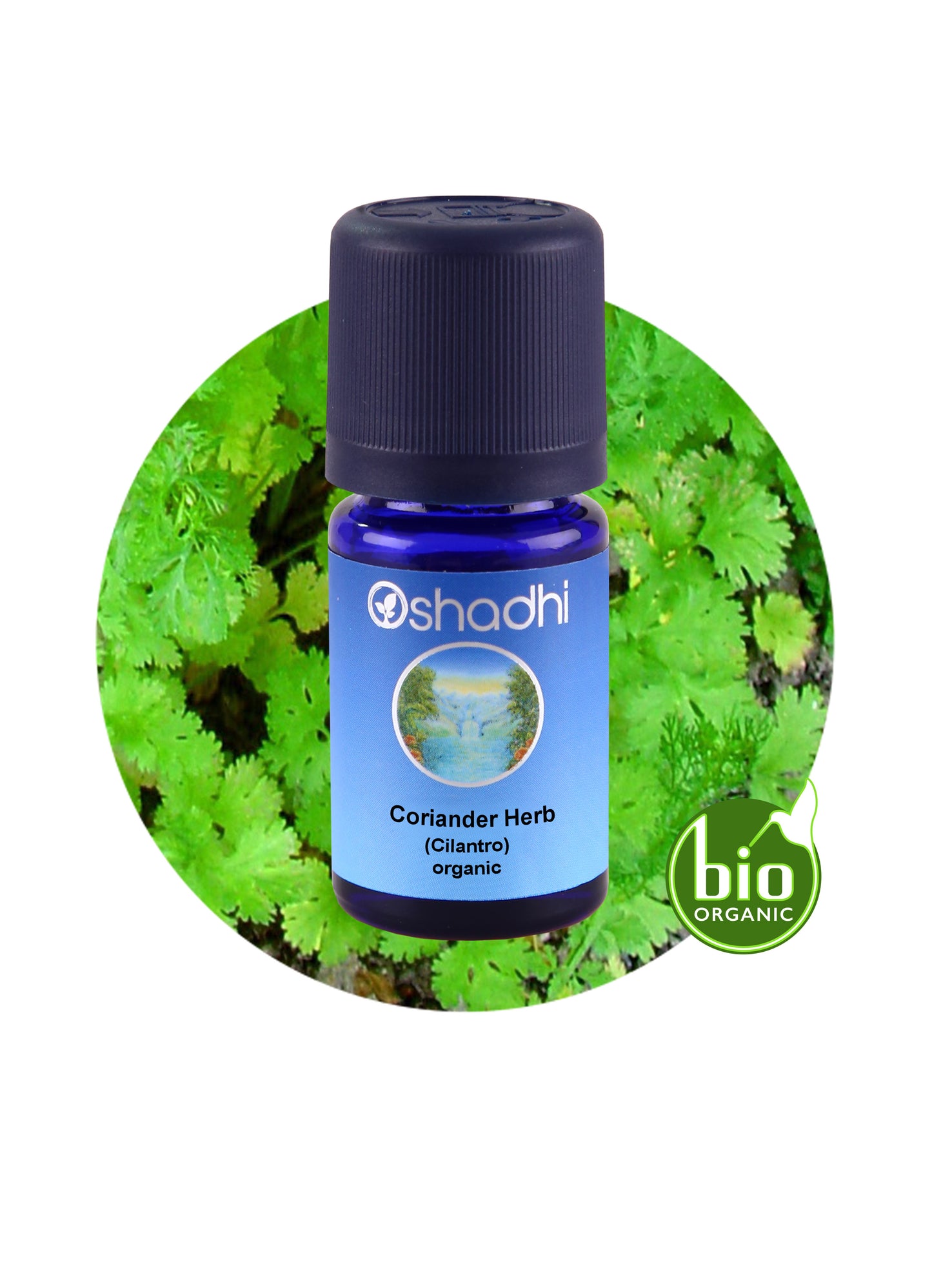
Coriander herb and coriander seed come from the same plant and share almost nothing aromatically. Seed oil is led by linalool and smells sweet and floral. Herb oil, from the leaves, is led by fatty aldehydes and smells of fresh cilantro.
01 · Origin
Coriandrum sativum belongs to the carrot family, Apiaceae, and has been grown across the Mediterranean and western Asia since antiquity. This oil is distilled from the herb, grown under certified organic cultivation in Egypt (DE-ÖKO-007).
02 · Chemistry
Trans-2-decenal leads, followed by decanal and trans-2-dodecenal. These aliphatic aldehydes give the characteristic green, waxy, slightly soapy note that some people perceive strongly and others barely at all. Linalool is present but secondary.
03 · In Practice
Green, aldehydic and fresh, with a citrus-peel brightness and a waxy undertone. A top note. Natural perfumery, where it adds a vivid green top in very small amounts, and diffusion. Direct comparison with Coriander Seed (No. 1800) demonstrates how plant part reshapes chemistry. Blends with lime, lemongrass, ginger, bergamot, petitgrain, black pepper and basil.
General information: For external use only. Dilute before applying to skin. Keep away from heat and sunlight. Keep out of reach of children. Avoid contact with eyes and mucous membranes.
How to use Essential Oils
Find out more about how Essential Oils can be used and the different application methods:
https://oshadhi.com/pages/how-to-use-essential-oils