

Blue Tansy / Blue Chamomile (Organic)
Blue Tansy / Blue Chamomile (Organic)
Low stock: 9 left
Couldn't load pickup availability
Product No. 1690
Tanacetum annuum
| Origin | Morocco |
| Plant part | Blossoms |
| Cultivation | Wild-crafted organic |
| Extraction | Distilled |
| Main constituents | Camphor, Sabinene, Chamazulene, 3,6 - Dihydrochamazulene |
| Aroma | Herbaceous, Sweet, Spicy |
| Ingredients (INCI) | Tanacetum Annuum Flower Oil* |
*Certified organic.
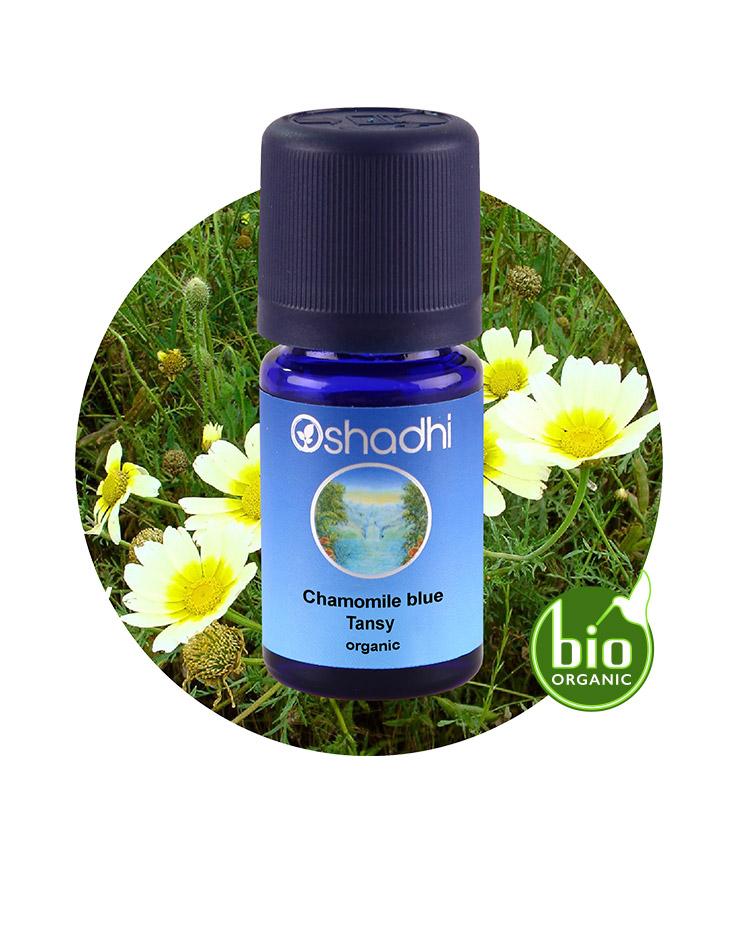
Blue tansy is often sold as blue chamomile, and it is not a chamomile. Tanacetum annuum shares chamazulene with German chamomile, but its chemistry is otherwise its own. It is also a different plant from Tanacetum vulgare, the thujone-bearing tansy of European hedgerows.
01 · Origin
An annual of the daisy family, Asteraceae, native to Morocco and the western Mediterranean. It is a small, bushy plant with finely divided, silvery-green leaves and yellow flower heads. This oil is distilled in Morocco from wild-crafted organic blossom.
02 · Chemistry
Camphor and sabinene make up the lighter fraction. Chamazulene and 3,6-dihydrochamazulene supply the colour and much of the depth. As with other chamazulene oils, the blue develops in the still rather than in the plant.
03 · In Practice
Sweet, herbaceous and fruity, with a camphoraceous top and a soft apple-like undertone. Deep indigo. It stains fabric and is unsuited to water-based ultrasonic diffusers. Skincare formulation, massage blends and natural perfumery, used in small proportion. Comparison with Chamomile, Blue (No. 1680) separates the two blue oils clearly. Blends with lavender, helichrysum, rose, ylang ylang, sandalwood, frankincense and bergamot.
General information: For external use only. Dilute before applying to skin. Keep away from heat and sunlight. Keep out of reach of children. Avoid contact with eyes and mucous membranes.
How to use Essential Oils
Find out more about how Essential Oils can be used and the different application methods:
https://oshadhi.com/pages/how-to-use-essential-oils