

Cedar Leaf / Thuja (organic)
Cedar Leaf / Thuja (organic)
Low stock: 6 left
Sell by Date: March 2029
Couldn't load pickup availability
Product No. 2805
Thuya occidentalis
| Origin | Canada |
| Plant part | Needles/Twigs |
| Cultivation | Wild-crafted organic |
| Extraction | Distilled |
| Main constituents | alpha-Thujone, beta-Thujone, Fenchone, Sabinene |
| Aroma | Fruity, Sweet, Woody |
| Ingredients (INCI) | Thuya Occidentalis Leaf Oil* |
*Certified organic.
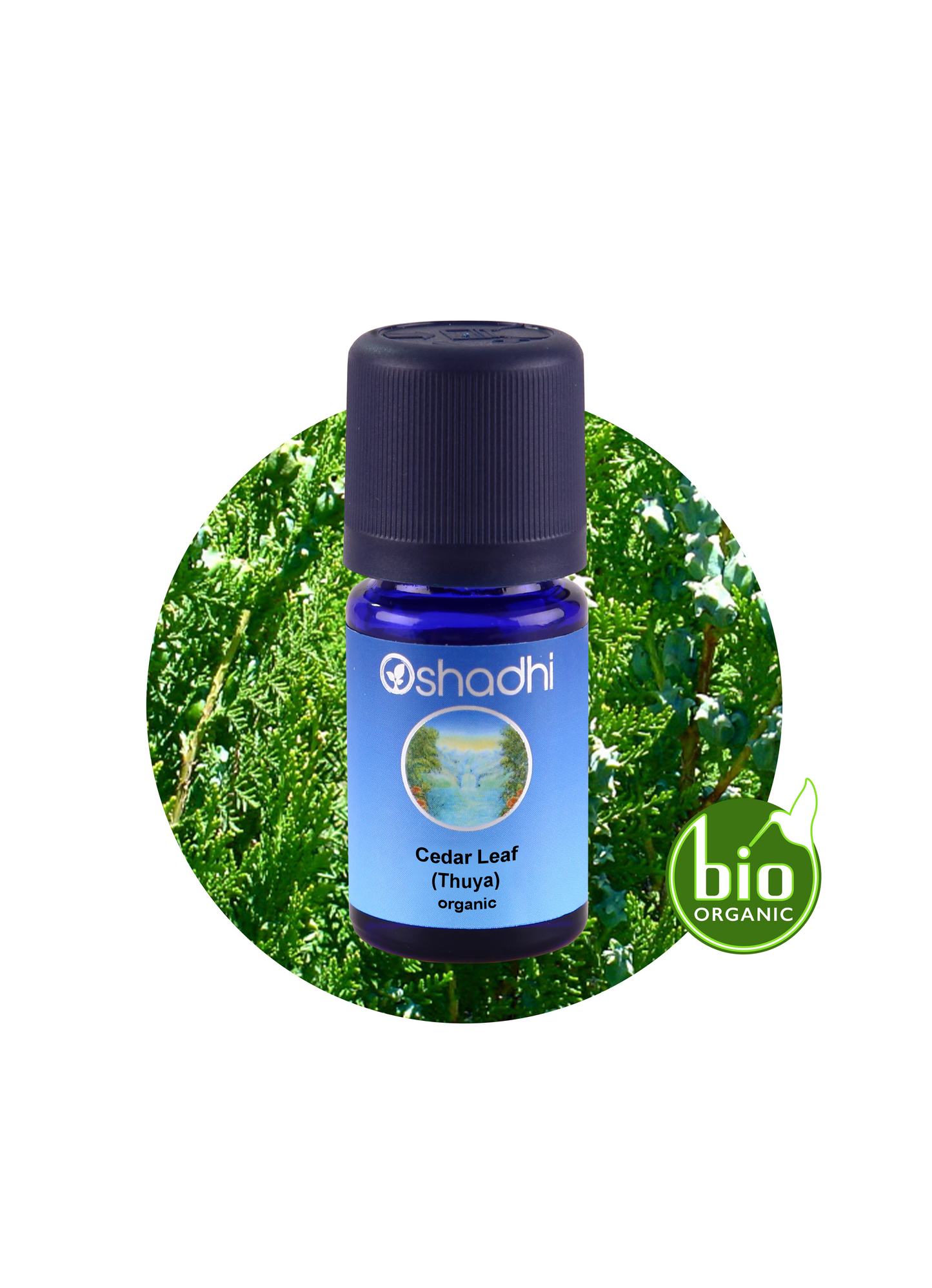
Cedar leaf is not cedar. Thuja occidentalis is a member of the Cupressaceae; the true cedars, such as Himalaya Cedar (No. 3096) and Atlas cedar, belong to Cedrus in the Pinaceae. The oils come from different families and different plant parts, and should not be confused.
01 · Origin
Northern white cedar, also called arborvitae, grows across eastern Canada and the north-eastern United States, often on wet ground. This oil is distilled from the needles and twigs of wild-crafted trees in Canada under organic certification.
02 · Chemistry
A ketone oil. Alpha-thujone and beta-thujone dominate, with fenchone, another monoterpene ketone, behind them. Sabinene adds a woody, peppery note. A ketone content this high places the oil outside everyday aromatherapy.
03 · In Practice
Fresh, sharp and camphoraceous, with a green-woody finish. Reserved for experienced practitioners. Used only at low concentration and for short periods, in natural perfumery trace work, room scenting and olfactory study. Blends with cedarwood, pine, fir, juniper, lavender and lemon.
General information: For external use only. Dilute before applying to skin. Keep away from heat and sunlight. Keep out of reach of children. Avoid contact with eyes and mucous membranes.
How to use Essential Oils
Find out more about how Essential Oils can be used and the different application methods:
https://oshadhi.com/pages/how-to-use-essential-oils